A. Proctor Group

- Innovation Built on experience

 Contact Us  |   Register  |  


Register
Forgot Password?

Profloor Refurb Deck


Profloor Refurb Deck

Product Description

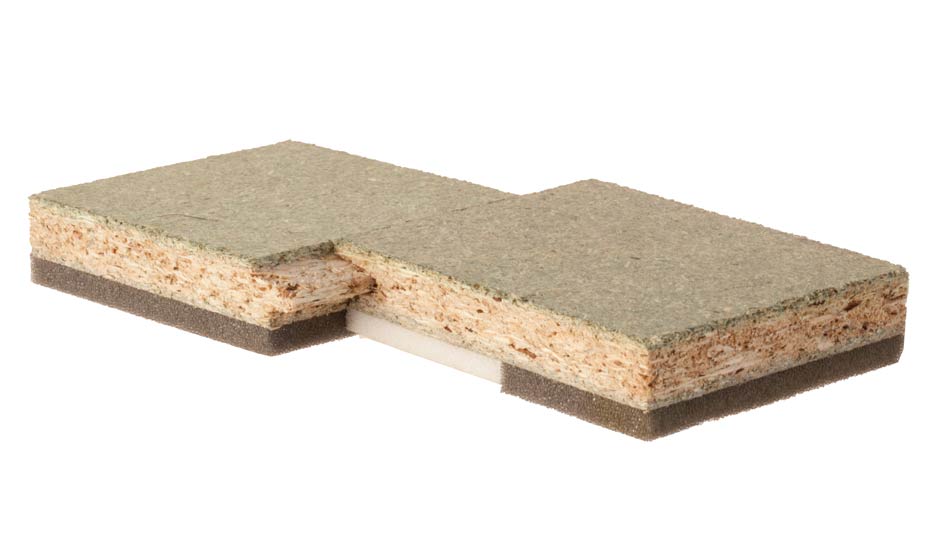
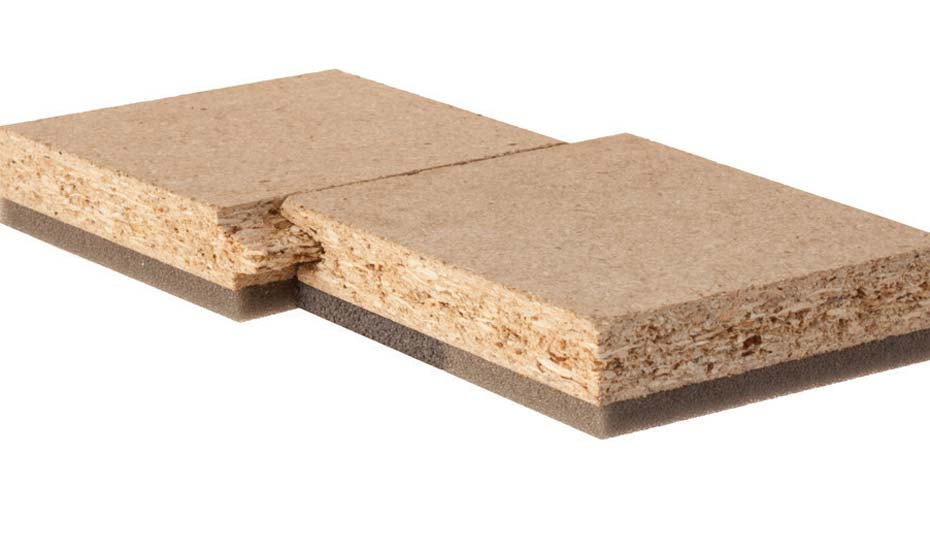
Profloor Refurb Deck System provides the high degree of isolation necessary to give significant improvements in impact sound insulation. Profloor Refurb Deck System utilises the dynamic properties of dual foam technology and a patented edge support strip which prevents fracture of the tongue and grooved joint.


STANDARD: for normal domestic loadings (up to 1.4kN/m2)

HI-LOAD:  for floors with higher loadings (up to 4.0kN/m2)


Key Features

  • FFT5 to Robust Details; covered by BBA.
  • Suitable for situations where floor - to - ceiling height is less critical (26mm total depth).
  • Hi-Load Grade available for areas of excess loading.
  • Improves impact sound.
  • Suitable for both timber and concrete floors.
  • Simple to install and no multi - layer build up to achieve finished floor.
  • Deck utilises 18mm P5 chipboard.
  • Panels have patented edge support strip which prevents fracture of the tongue and grooved joints.
  • Foams are resistant to biological attack.

Advantages

  • Ideal for both new build and refurbishment.
  • Significantly reduces impact and airborne noise pollution in multi - level buildings.
  • Supremely versatile, making it suitable for most domestic flooring applications.
  • Easy and fast to install to wooden, joisted or concrete floors (pre-cast or in situ).
  • Floors can be used immediately after installation.
  • Designed to last the lifetime of the floor.
 
 Profloor Refurb Deck PropertiesResult
Length2400mm
Width600mm
Overall Depth 26mm
Resilient Layer Depth 8mm
Flanking Strip Dimensions150mm x 7mm x10m Rolls
Floor Surface18mm Chipboard
Maximum Floor Load (Standard)Up to 1.4 kN/m2
Maximum Floor Load (Hi-Load)Up to 4 kN/m2
Non-Loadbearing Partition On Finished Floor No
Robust Detail FFT1No
Robust Detail FFT2No
Robust Detail FFT3No
Robust Detail FFT4No
Robust Detail FFT5Yes
BBA CertifiedYes
Profloor Refurb Deck Hi-Load

Profloor Refurb Deck Hi-Load

Used for floors with higher loadings (up to 4.0kN/m2)


Profloor Flanking Strip

Profloor Flanking Strip

Available in 5mm, 7mm and 10mm thickness with various widths to suit Profloor Systems.


Profloor Adhesive 1ltr

Profloor Adhesive 1ltr

High solid content PVA adhesive.  Size 1 litre bottle.


1. Laying Procedure

The Profloor Refurb Deck System should be laid in accordance with the manufacturer's printed instructions. Copies of the laying procedures are available to every site. Relevant trades must follow these carefully to ensure a satisfactory installation. (See figure 1) for a general layout.


2. Perimeter Support and Flanking Isolation

Profloor Refurb Deck panels must be supported at all perimeters. The support between adjacent panels is fitted during manufacture.
(See figure 2.)


The support at room perimeters must be fitted on site using Profloor Flanking/Support Strip. This strip combines perimeter support and isolation of the flooring system from the adjacent structure.


Profloor Flanking/Support Strip is supplied, normally 150mm wide, and can be supplied with or without 50mm double sided tape. Other widths can be supplied if required. Remove a 50mm wide strip of foam from the edges of the Profloor Refurb Deck panels which abut the room perimeter.
(See figure 3.)


Where the sub-floor is concrete, Profloor Flanking Support Strip with double sided tape is attached to the exposed area of the panel.


Where the sub-floor is timber, Profloor Flanking Support Strip without double sided tape is available.


3. Installation

Commence laying Profloor Refurb Deck System panels in the corner furthest from the point of access. Apply the Profloor Flanking Support Strip and ensure it is positioned between the perimeter structure and the Profloor Refurb Deck panel. Lay the Profloor Refurb Deck panels, along the full length of the room, ensuring the exposed edge is properly aligned to allow a straight joint for the next line of panels.
See section (6) regarding expansion requirements. 


4. Profloor Refurb Deck Panel Stagger

Profloor Refurb Deck panels, in adjacent rows, should be staggered by a minimum of 400mm. The offcut from the previous row should be used at the start of the next row, provided that it is not less than 200mm.
(See figure 4.) 


5. Fixing Profloor Refurb Deck Panels

Mechanical fixings must not be used to fix main flooring panels. Apply Profloor Adhesive to the T&G joints of all Profloor Refurb Deck panels before butting them together.
(See figure 5.)


Remove any surplus adhesive, before it dries, from the surface, with a damp cloth. 


6. Mounting Partitions

It is not recommended that partitions be mounted off the Profloor Refurb Deck flooring systems. 


7. Expansion of Flooring Material

Allow for the possible expansion of the Profloor Refurb Deck panel by leaving a gap between the free edge of the panel and the perimeter wall or other abutment.


This gap should be calculated as 1mm per linear metre of flooring and in no circumstances should be less than 10mm. (See figure 4.)


If required, small wedges can be placed between the Profloor Flanking Strip and the structure. These wedges must be removed before skirtings are fixed. 


8. Gap at Wall or Door Frame

Ensure that the Profloor Refurb Deck panel does not make contact with any part of the wall structure including door frames and the like. Use Profloor Flanking Strip at all perimeters to ensure this separation.


When laying in a refurbishment situation with facings in position, the application is simplified by cutting 33mm off the bottom of the facings. This allows the Profloor Flanking Strip and board to slip underneath. (See figure 7.) 


9. Services within Flooring Systems

It is imperative that all services are in place prior to laying the Profloor Refurb Deck panels. Services cannot be accommodated between Profloor Refurb Deck and the sub-floor. Where access is required to services below the sub-floor, the Refurb Deck panel is cut to suit.


Hatch Support Pads are placed at each corner of the opening formed and at 400mm centres if the hatch is longer than 400mm.


The Profloor Support Pads are positioned to support the main floor finish and the hatch infill panel.


The floor finish and the hatch panel are fixed to the Support pads using self tapping screws through pre-drilled holes. The length of the self tapping screws must not penetrate through the foams to the sub-floor. Profloor Support Strip must be fixed to the perimeter of the hatch infill panel, leaving clearance for the Profloor Support Pads.
(See figure 8.) 


10. Doorways

Where Profloor Refurb Deck panels are butted together, without the tongue and groove, ie. in doorways, a Profloor Support Strip must be attached to the end of each board.


This is the only situation where mechanical fixings may be used. (See figure 9.) 


11. Skirting Boards

Fold the Profloor Support Strip over onto the Profloor Refurb Deck, apply weight to compress the system (the Tradesman's weight is normally sufficient) and fix the skirting so that it rests on the Profloor Flanking Strip. Trim the edge of the Profloor Flanking Strip flush with the skirting. 


12. Kitchen/Bathroom/Point Loadings

When a floor loading is in excess of 1.4kN, (ie. under bath, WC, Kitchen unit or night storage heaters) it is recommended that Profloor Refurb Deck Hi-load is used.


13. Protection

To prevent damage by following trades, the finished floor should be covered with a protective layer immediately after installation.

Tiling onto Profloor Deck Systems

The floor finish must be rigid, stable and capable of supporting additional load without flexing, for this reason it is recommended that Hi-Load variants are used in areas to be tiled. Consideration to under-tile ventilation should be given. Follow the installation advice given in the User Guide with respect to panel jointing. There are three basic alternative methods to follow: -


1. Overlay the floor finish with 6mm (minimum) dry exterior grade plywood, which has been fully sealed. Screw down the plywood at 300mm intervals, ensuring fixings do not penetrate the resilient layer or come into contact with the subfloor (alternatively, adhere using an appropriate adhesive). Ensure all junctions are supported. Use a category C2 (flexible) adhesive.


2. Overlay the panels with a proprietary decoupling membrane and use a category C2 (flexible) adhesive.


3. Overlay the panels with a proprietary tile backer board and install following the manufacturers’ instructions. Use a category C2 (flexible) adhesive.


A CG2 (flexible) grout is recommended with all of the above methods. There are many factors to consider when deciding which method is best suited for your particular circumstances, please consult the manufacturer of the tile, adhesive & grout for further recommendations.

Tiling should be installed in accordance with BS 5385. If in any doubt, seek professional advice.

Profloor Refurb Deck Installation figure 1

Profloor Refurb Deck Installation figure 2

Profloor Refurb Deck Installation figure 3

Profloor Refurb Deck Installation figure 4

Proloor Refurb Deck Installation figure 5

Profloor Refub Deck Installation figure 6

Profloor Refurb Deck Installation figure 7

Profloor Refurb Deck Installation figure 8

Profloor Refurb Deck Installation figure 9


Not found what you are looking for?

Post on the technical forum


Bookmark and share with: